A Small Tractor, a Big Change for Farmers
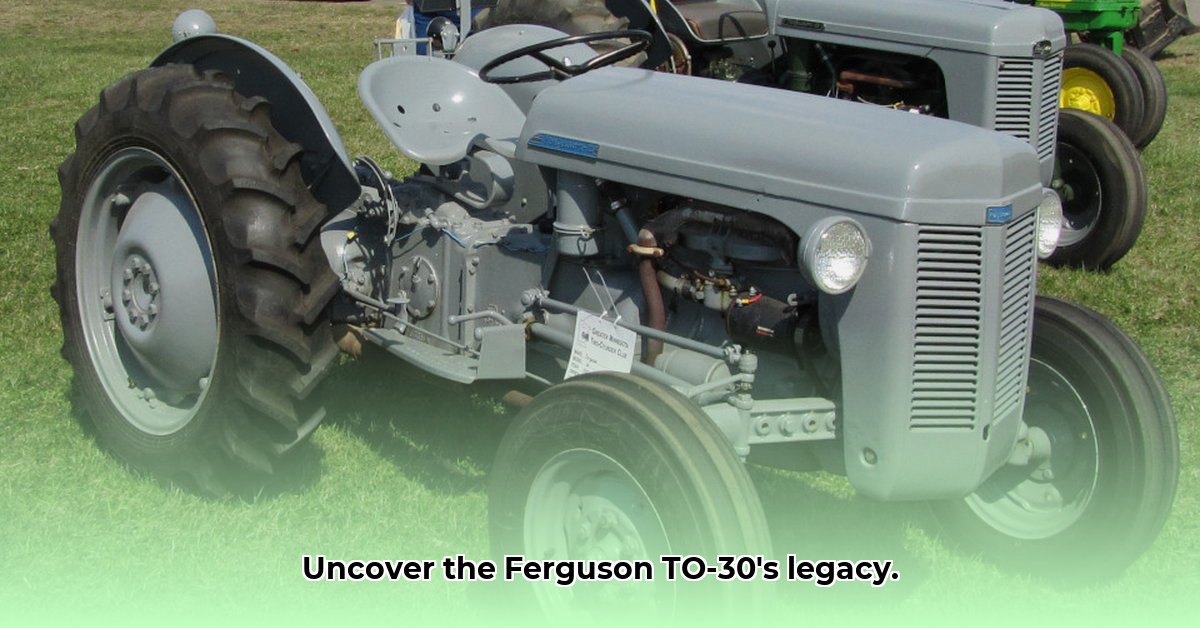
Imagine 1951: horses still toiled in many fields, a backbreaking existence. Then came the Ferguson TO-30, a relatively modest machine (by today’s standards) that revolutionized farming. Its 30 horsepower might seem meager now, but it represented a monumental leap for countless small farms, drastically altering their efficiency and workload. This wasn't simply about power; it was about a fundamental shift in agricultural practices. But how did this seemingly unassuming tractor leave such a lasting mark? For more on the history of agricultural mechanization, see this link to more tractor history.
Under the Hood: The TO-30's Mechanics
The TO-30 boasted a 2.1-liter engine, small even for its time. Its four forward gears lacked synchronization, demanding skill and patience from its operator – think mastering a challenging stick shift. While marketed as a 30-horsepower tractor, its actual pulling power likely fell somewhat short, a not uncommon limitation of early agricultural machinery. Its 10-gallon fuel tank also constrained its workday, demanding frequent refills. These seemingly minor details illuminate the practical challenges faced by farmers in the early years of mechanized agriculture.
More Than Just Power: Reshaping Farming
The TO-30's impact transcended simple horsepower. Farmers could accomplish in hours what once required entire days, lowering labor costs and significantly boosting crop yields. However, we must also acknowledge the environmental consequences. Unlike today's tractors, the TO-30's gasoline engine contributed to air pollution. This isn't a criticism, but a recognition of the technological limitations of its era. The question is not simply "was it sustainable?", but rather, "how do we evaluate its environmental impact within the context of its time and available technology?"
Examining the TO-30's Environmental Impact: Then and Now
Judging the TO-30's sustainability by modern standards is inherently complex. While vastly more efficient than manual methods, its fuel efficiency and emissions fall drastically short of today's expectations. Crucially, comprehensive data on its long-term environmental impact—fuel consumption, emissions, maintenance challenges—remains scarce. Moreover, parts availability poses a significant hurdle today, potentially leading to premature scrapping and increased waste. This highlights a broader need for a framework to assess the lifetime environmental impact of older machinery, considering both its operational efficiency and its broader lifecycle.
The TO-30's Lasting Legacy
Despite its limitations, the TO-30 remains a pivotal figure in agricultural history. It dramatically altered farming practices, particularly for smaller operations, accelerating the transition to mechanized agriculture. Its effects resonate even today. Its legacy isn't solely about horsepower; it represents a profound shift, transitioning from animal power to engine power, forever changing the agricultural landscape. How many farms would still rely on horse-drawn plows without this innovation?
Unanswered Questions & Future Research: Delving Deeper
Analyzing the TO-30 requires deeper investigation. Here are some key areas for future research:
- Fuel Consumption Records: Precise data on fuel consumption is critical for a nuanced understanding of the TO-30's energy usage.
- Maintenance and Repair Logs: Access to maintenance records provides invaluable data on the tractor's operational lifespan, repair costs, and potential points of failure.
- Detailed Emissions Comparison Studies: A comparative analysis of the TO-30's emissions against modern farm equipment is crucial for assessing its environmental footprint in a more contextual manner.
- Socioeconomic Impact Studies: Understanding the broader socioeconomic effects on farmers, rural communities, and labor markets is crucial for a holistic evaluation of its contribution.
These research avenues offer invaluable insights, enriching our understanding of the TO-30's multifaceted impact. The story of this seemingly simple machine remains incomplete, awaiting further investigation to fully reveal its enduring influence.
How to Assess the Environmental Impact of Vintage Farm Equipment: A Case Study
The Ferguson TO-30 provides a compelling case study for assessing the environmental impact of vintage farm equipment. Evaluating its sustainability requires a multi-faceted approach encompassing its entire lifecycle:
1. Manufacturing and Materials: Examining its material sourcing, manufacturing processes, and transportation reveals its initial environmental footprint.
2. Operational Efficiency and Emissions: Comparing its fuel consumption and emissions to modern tractors establishes its operational efficiency and environmental impact during its working life.
3. Maintenance and Repair: Analyzing the availability of parts, repair methods, and maintenance practices provides insight into the longer-term resource consumption associated with its operation.
4. End-of-Life Considerations: Understanding its disposal and recycling options helps determine its overall contribution to waste streams.
A comprehensive life cycle assessment (LCA) is critical for a complete evaluation. This process allows a more nuanced evaluation of the TO-30’s impact, considering the technological context of its era and ultimately informing more sustainable agricultural practices in the future.